



Wenn es eine Technik gibt, die die indische Küche definiert, dann ist es das Tadka. Diese verblüffend einfache Geste — ganze Gewürze in sehr heißes Fett geben — ist der Grund für die außergewöhnliche aromatische Tiefe, die man in Dals, Currys, Reisgerichten und Gemüse auf dem gesamten Subkontinent findet. Innerhalb von Sekunden verwandelt eine Handvoll Samen ein gewöhnliches Gericht in etwas Unvergessliches.
Tadka trägt je nach Region verschiedene Namen: Chaunk oder Chhonk auf Hindi, Baghar auf Urdu, Phodni auf Marathi, Thalithal auf Tamilisch, Oggarane auf Kannada, Phoron in Bengalen. Diese regionalen Varianten spiegeln den Reichtum einer Technik wider, die in der Praxis in ganz Indien universell ist. Das Wort bezeichnet auch das Ergebnis selbst: das duftende Gewürzöl, das über das fertige Gericht gegossen wird.
Tadka ist die Seele der indischen Küche. Ohne sie bleiben selbst die feinsten Gewürze stumm.
Was ist Tadka genau?
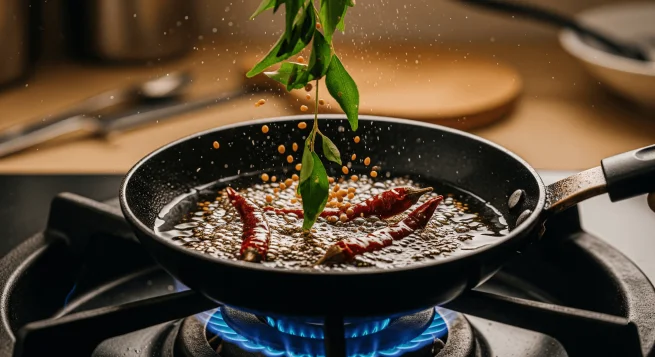
Tadka ist sowohl eine Technik als auch ein Ergebnis. Als Technik besteht es darin, ein Fett — Ghee, Senföl, Kokosöl oder Pflanzenöl — auf hohe Temperatur zu erhitzen und dann ganze Gewürze in einer bestimmten Reihenfolge hineinzugeben. Als Ergebnis ist es diese Mischung aus Öl und aromatisierten Gewürzen, die dann über das fertige Gericht gegossen wird.
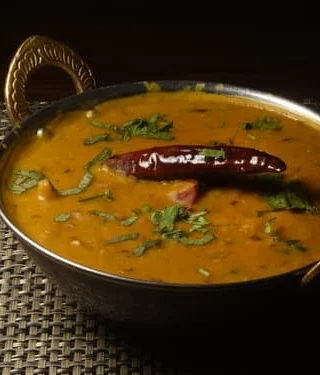
Es gibt zwei Arten, Tadka in einem Rezept einzusetzen. Kaccha Tadka (rohes Tempern) wird zu Beginn des Kochens durchgeführt: Die Gewürze werden im Öl getempert, dann werden die anderen Zutaten — Zwiebeln, Tomaten, Gemüse — direkt in die Pfanne gegeben. Dies ist die Grundlage der meisten Currys. Pakka Tadka (gekochtes Tempern) wird als Finish über ein bereits gekochtes Gericht gegossen: ein dampfendes Dal, gekrönt mit einem Rinnsal aus Ghee und knisternden Gewürzen. Es ist diese zweite Technik, die das ikonische Zischen der indischen Küche erzeugt.
Die Wissenschaft hinter Tadka: warum es funktioniert
Tadka ist nicht einfach ein traditionelles Ritual — es ist eine Technik, die auf präziser Chemie basiert. Die meisten Aromastoffe in Gewürzen sind fettlöslich, das heißt, sie lösen sich in Fetten und nicht in Wasser. Wenn Sie Gewürze in einer wässrigen Brühe oder Sauce kochen, extrahieren Sie nur einen Bruchteil ihres aromatischen Potenzials. Heißes Öl hingegen erfasst und setzt diese Moleküle mit bemerkenswerter Effizienz frei.
Die Temperatur spielt eine entscheidende Rolle. Zu kühles Öl extrahiert die ätherischen Öle nicht ausreichend — die Gewürze infundieren schwach und entfalten ihr volles Potenzial nicht. Zu heißes Öl, nahe am Rauchpunkt, verbrennt die Gewürze in Sekunden und erzeugt bittere Verbindungen. Die ideale Zone liegt je nach verwendeten Gewürzen zwischen 160 und 200 °C.
Auch die Maillard-Reaktion spielt eine Rolle: Unter dem Einfluss intensiver Hitze reagieren die Zucker und Aminosäuren an der Oberfläche der Gewürze miteinander und erzeugen neue Aromastoffe, die vor dem Kochen nicht existierten. Deshalb entwickeln Kreuzkümmelsamen, die in Ghee getempert werden, so tiefe geröstete Haselnussaromen — ein Profil, das durch einfaches Kaltaufgießen nicht zu erreichen ist.
Die wichtigsten Gewürze für Tadka
Nicht alle Gewürze eignen sich für das Tempern — manche verbrennen zu schnell, andere verlieren ihre Aromen bei hohen Temperaturen. Hier sind die Grundpfeiler des Tadka, die einzeln oder in Kombination verwendet werden:
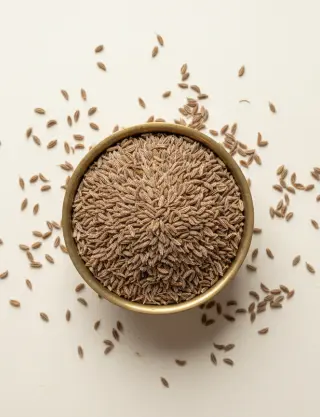
- Kreuzkümmelsamen (Jeera): das universellste Tadka-Gewürz. Innerhalb von Sekunden im heißen Öl bräunen sie sich, knistern und entwickeln ein bemerkenswert intensives rauchiges Haselnussaroma. Unverzichtbar in nordindischen Dals, Jeera Rice und Hunderten anderer Gerichte.
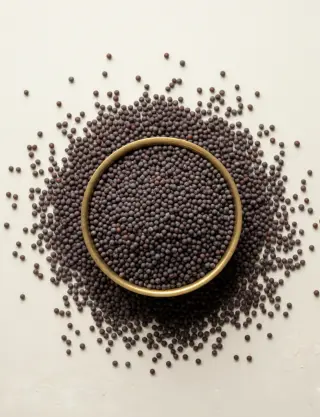
- Schwarze Senfkörner (Rai/Sarson): die Signatur des südindischen Tadka. Sie benötigen mehr Hitze als Kreuzkümmel und platzen spektakulär im Öl auf. Ihr scharfer, nussiger Geschmack ist in Sambar, Rasam und Poha unersetzlich.
- Curryblätter (Kadi Patta): frisch oder getrocknet, sie geben ein intensives zitrusartiges Krauteraroma ab, das für die südindische Küche charakteristisch ist. Achtung: Sie spritzen beim kräftigen Knistern heißes Öl. Ihr Duft ist einzigartig und kann durch kein anderes Gewürz ersetzt werden.
- Getrocknete rote Chilischoten: sie fügen Farbe und Schärfe hinzu. Im heißen Öl werden sie leicht dunkler und verleihen eine sanfte, tiefe Wärme — ganz anders als die rohe Schärfe von Chilipulver. Je nach gewünschter Intensität ganz oder zerbrochen verwenden.
- Asafoetida (Hing): eine winzige Prise dieses scharfriechenden Harzes verwandelt sich in Sekunden in eine tiefe Umami-Note. Unverzichtbar in der indischen vegetarischen Küche, besonders beim Dal Tadka. Es schäumt und schwillt sofort — nie überdosieren.
- Das Fett: Ghee (geklärte Butter) ist die traditionelle Wahl Nordindiens — es bringt ein unvergleichliches Haselnussaroma und einen hohen Rauchpunkt. Kokosöl wird in Kerala und Tamil Nadu bevorzugt, Senföl in Bengalen, Erdnussöl in Gujarat. Jedes Fett ist selbst ein Träger regionaler Identität.
Die Schritt-für-Schritt-Technik
Das Schöne am Tadka liegt in seiner Schnelligkeit: Alles geschieht in 30 bis 60 Sekunden. Die Reihenfolge, in der die Gewürze hinzugefügt werden, ist entscheidend, da jedes eine andere Garzeit hat. So läuft es ab:
- Schritt 1 — Pfanne erhitzen: stellen Sie Ihre Tadka-Pfanne auf mittlere bis hohe Hitze. Geben Sie 1 bis 2 Esslöffel Ghee oder Öl hinzu. Das Öl ist bereit, wenn ein einzelner Kreuzkümmelsamen, der hineingegeben wird, sofort zischt.
- Schritt 2 — Senfkörner zuerst: wenn Ihr Rezept sie enthält, kommen sie zuerst — sie brauchen die höchste Hitze. Warten Sie, bis sie aufplatzen und springen (5 bis 8 Sekunden). Teilweise abdecken, wenn das Spritzen stark ist.
- Schritt 3 — Kreuzkümmelsamen: fügen Sie den Kreuzkümmel hinzu. Er sollte sich in 5 bis 8 Sekunden leicht bräunen und sein Haselnussaroma freisetzen. Sie hören das charakteristische Knistern.
- Schritt 4 — Getrocknete Chilis und Curryblätter: geben Sie die getrockneten roten Chilis (ganz oder zerbrochen) und dann die Curryblätter hinzu. Halten Sie Ihr Gesicht fern — die Blätter spritzen kräftig heißes Öl. 2 bis 4 Sekunden reichen aus.
- Schritt 5 — Asafoetida zuletzt: eine winzige Prise, maximal 1 bis 2 Sekunden. Es schäumt sofort. Das ist Ihr Signal zum Gießen.
- Schritt 6 — Sofort gießen: gießen Sie das heiße Tadka ohne Verzögerung über Ihr Gericht. Das intensive Zischen, wenn das Öl auf das Dal oder den Joghurt trifft, ist sowohl ein Sinneserlebnis als auch die Bestätigung, dass die Aromen übergehen. Lassen Sie die Gewürze nicht weiterkochen.
Das Zischen des Tadka, das über ein dampfendes Dal gegossen wird, ist eines der ikonischsten Geräusche der indischen Küche. Es ist das Geräusch einer fertigen Mahlzeit.
Regionale Varianten
Einer der faszinierendsten Aspekte des Tadka ist, wie dramatisch es sich von Region zu Region verändert. Dieselben Hülsenfrüchte, in Delhi und Chennai zubereitet, ergeben zwei grundlegend verschiedene Gerichte — und es ist das Tadka, das den Unterschied macht.
In Nordindien basiert Tadka auf Ghee, Kreuzkümmel, Knoblauch und getrockneten Chilis. Asafoetida und manchmal Ingwer werden häufig hinzugefügt. Dies ist das Tadka von Dal Makhani, Dal Tadka und Jeera Rice. Der Geschmack ist warm, buttrig und tief aromatisch.
In Südindien ersetzt Kokosöl oder Sesamöl das Ghee. Senfkörner übernehmen vom Kreuzkümmel als primäres Gewürz die Führung. Curryblätter sind allgegenwärtig. Oft wird Urad Dal (schwarze Linsen) hinzugefügt, der im Öl golden und knusprig wird. Dies ist das Tadka von Sambar, Rasam, Poha und Tamarindenreis.
In Bengalen heißt Tadka Phoron und basiert auf scharfem Senföl und Panch Phoron — einer Mischung aus fünf ganzen Samen: Kreuzkümmel, Fenchel, Schwarzkümmel, Bockshornklee und Senf. Diese charakteristische Mischung verleiht bengalischen Gerichten ihre einzigartige Persönlichkeit.
In Gujarat enthält der Vaghar oft Sesamsamen und manchmal Zucker, was den gujaratischen Geschmack für süß-würzige Aromen widerspiegelt. Erdnussöl ist das bevorzugte Fett.
Häufige Fehler vermeiden
Tadka ist im Prinzip einfach, erfordert aber etwas Übung. Hier sind die häufigsten Fallstricke:
- Öl zu heiß: die Gewürze verbrennen innerhalb von Sekunden und werden bitter. Wenn Sie Rauch sehen, bevor Sie die Gewürze hinzufügen, nehmen Sie die Pfanne 10 Sekunden vom Herd und versuchen Sie es erneut.
- Öl nicht heiß genug: die Gewürze treiben lustlos, ohne zu knistern. Keine Extraktion der ätherischen Öle, keine aromatische Entwicklung. Ergebnis: ein flaches, leblos wirkendes Tadka.
- Alle Gewürze auf einmal hinzufügen: jedes Gewürz hat seine eigene optimale Garzeit. Senfkörner brauchen mehr Zeit als Curryblätter. Alles gleichzeitig hinzuzufügen garantiert, dass manche verbrennen, während andere kaum ziehen.
- Warten vor dem Gießen: sobald die Aromen aufsteigen, gießen Sie. Die Gewürze kochen im noch heißen Öl weiter, auch wenn der Herd ausgeschaltet ist. Jede zusätzliche Sekunde bringt Sie näher an den Verbrennungspunkt.
Die Tadka-Pfanne: warum ein dediziertes Werkzeug wichtig ist
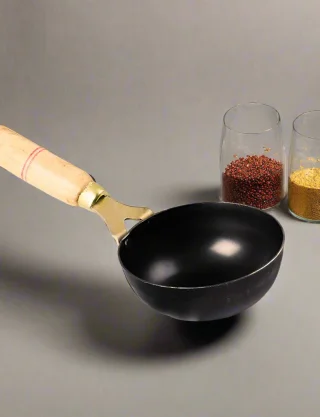
Man kann Tadka technisch gesehen in jedem kleinen Topf zubereiten, aber die traditionelle Tadka-Pfanne aus Gusseisen ist darauf ausgelegt, jeden Aspekt der Technik zu optimieren. Ihre kleine Größe — 8 bis 12 cm Durchmesser — konzentriert die Hitze und taucht die Gewürze vollständig in das Fett ein, was eine gleichmäßige Extraktion gewährleistet. Der dicke Boden sorgt für eine gleichmäßige Wärmeverteilung ohne Hotspots.
Der lange Griff ist eine Sicherheitsnotwendigkeit: Senfkörner und Curryblätter spritzen beim Knistern kräftig heißes Öl. Die Pfanne auf Abstand zu halten, schützt Hand und Gesicht. Der ausgestellte Rand ermöglicht ein gleichmäßiges Gießen des Tadka in einer fließenden Bewegung, ohne einen Tropfen des aromatisierten Öls zu verlieren.
Bei regelmäßiger Verwendung entwickelt das Gusseisen eine natürliche Patina, die seine Leistung schrittweise verbessert — die Pfanne wird immer antihaftbeschichteter und leitet die Wärme immer gleichmäßiger. Es ist ein Werkzeug, das mit der Zeit besser wird, genau wie der Koch, der es benutzt.
Das Tadka zu meistern bedeutet, die Tür zur gesamten indischen Küche zu öffnen. Sobald Sie diese Technik beherrschen, werden Sie instinktiv verstehen, wie einfache Gewürze jedes Gericht verwandeln können.