



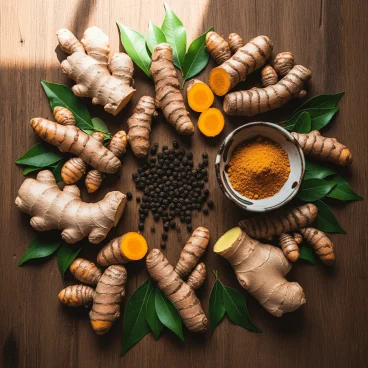
Chronische Entzündungen werden heute als eine der Hauptursachen vieler moderner Erkrankungen anerkannt: Arthritis, Herz-Kreislauf-Erkrankungen, Typ-2-Diabetes, Verdauungsstörungen, anhaltende Müdigkeit. Unser sitzender Lebensstil, unsere verarbeitete Ernährung und der tägliche Stress erzeugen im Körper einen niedriggradigen Entzündungszustand — diskret, aber konstant, der den Organismus über Jahre hinweg belastet.
Lange bevor die moderne Medizin dieses Phänomen benannte, hatte der Ayurveda — das indische Traditionalheilsystem mit mehr als 5.000 Jahren Geschichte — diese Realität bereits erkannt. Alte Texte beschreiben Entzündungen als einen Überschuss von Pitta, der Feuerenergie im Körper, und empfehlen präzise Heilmittel: Gewürze, Pflanzen, Ernährungspraktiken. Jahrhunderte mündlicher und dann schriftlicher Überlieferung verfeinerten diese Vorschriften.
Was bemerkenswert ist: Die zeitgenössische Wissenschaft bestätigt diese Vorschriften immer wieder. Studie für Studie zeigen die Wirkstoffe der im Ayurveda verwendeten Gewürze messbare entzündungshemmende Eigenschaften. Das ist keine Magie — es ist Biochemie. Und es sind ausgezeichnete Neuigkeiten für alle, die ihre Gesundheit auf natürliche Weise pflegen möchten, ohne auf Genuss zu verzichten.
Lass deine Nahrung deine Medizin sein und deine Medizin deine Nahrung. Dieser Hippokrates zugeschriebene Gedanke steht seit Jahrtausenden im Mittelpunkt der ayurvedischen Philosophie.
Hier ist ein Überblick über die sechs wirkungsvollsten Gewürze gemäß dem Ayurveda zur Bekämpfung chronischer Entzündungen — und was die Wissenschaft dazu sagt.
1. Kurkuma: der König der entzündungshemmenden Gewürze
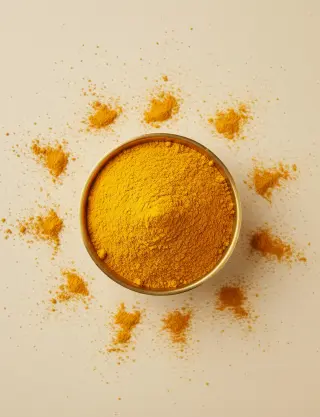
Wenn ein Gewürz den Ayurveda symbolisieren sollte, dann wäre es Kurkuma. In fast jedem indischen Curry vorhanden, seit Jahrtausenden wegen seiner heilenden Eigenschaften verwendet, steht es heute im Mittelpunkt erheblicher wissenschaftlicher Aufmerksamkeit. Sein wichtigster Wirkstoff, das Curcumin, ist eines der am intensivsten erforschten natürlichen Entzündungshemmer der Welt.
Curcumin hemmt den NF-kB (Nuklearer Faktor Kappa B), ein Protein, das als Schalter für Dutzende entzündungsbezogener Gene fungiert. Indem es dieses Signal im Vorfeld blockiert, verhindert Curcumin das Auslösen einer ganzen Entzündungskaskade. Forscher vergleichen seine Wirksamkeit mit bestimmten nichtsteroidalen Antirheumatika — ohne deren gastrointestinale Nebenwirkungen.
Aber nicht alle Kurkumas sind gleich. Der Curcumingehalt variiert je nach Sorte erheblich: Ein handelsüblicher Standard-Kurkuma enthält 2 bis 3 % Curcumin. Unser Lakadong-Kurkuma aus Meghalaya, angebaut in den Hügeln Nordostindiens, weist 7 bis 8 % Curcumin auf — zwei- bis dreimal mehr als gewöhnlicher Kurkuma. Deshalb wird er von Kennern und ayurvedischen Praktikern gezielt gesucht.
Ein entscheidender Punkt: Curcumin ist allein sehr schlecht bioverfügbar. Es ist fettlöslich (es löst sich in Fetten, nicht in Wasser) und wird von der Leber schnell metabolisiert. Damit es vom Körper richtig aufgenommen werden kann, sind zwei Bedingungen notwendig:
- Schwarzer Pfeffer: Piperin, der Wirkstoff im schwarzen Pfeffer, hemmt das Enzym, das Curcumin in der Leber abbaut. Das Ergebnis: Die Bioverfügbarkeit von Curcumin steigt laut Studien um 2.000 %. Eine einzige Prise schwarzer Pfeffer genügt.
- Ein Fett: Kokosöl, geklärte Butter (Ghee), Olivenöl — jedes Fett hilft, Curcumin zu lösen und die intestinale Aufnahme zu erleichtern. Deshalb ist die traditionelle Golden Milk — Kurkuma, Vollmilch (oder fettreiche Pflanzenmilch), schwarzer Pfeffer — eine so wirksame Formel.
2. Ingwer: der Entzündungshemmer bei Schmerzen
Ingwer ist das entzündungshemmende Gewürz schlechthin bei Muskel- und Gelenkschmerzen. Seine wichtigsten Wirkstoffe — Gingerole (im frischen Ingwer) und Shogaole (im getrockneten Ingwer, noch wirksamer) — hemmen die Enzyme COX-2 und LOX, dieselben Angriffspunkte wie bestimmte pharmazeutische Entzündungshemmer.
Klinische Studien sind ermutigend. Eine in Pain Medicine veröffentlichte Metaanalyse zeigte, dass der regelmäßige Ingwerkonsum Muskelschmerzen nach körperlicher Belastung signifikant reduziert. Andere Arbeiten bestätigten seine Wirksamkeit bei Menstruationsschmerzen (Dysmenorrhoe) und Symptomen der Kniearthrose, mit Schmerz- und Steifigkeitsreduktionen, die in einigen Fällen mit Ibuprofen vergleichbar sind.
Frischer und getrockneter Ingwer haben leicht unterschiedliche Profile. Frischer Ingwer, reich an Gingerolen, ist milder und aromatischer. Getrocknet und gemahlen ist er mit seinen Shogaolen wärmer, schärfer und pharmakologisch konzentrierter. Für den täglichen therapeutischen Einsatz ist Ingwerpulver praktischer und leichter dosierbar. Der Ayurveda nennt ihn Shunthi in seiner trockenen Form und betrachtet ihn als Vishwabheshaja — ein universelles Heilmittel.
3. Ceylon-Zimt: der Gefäßschützer
Ceylon-Zimt enthält Zimtaldehyd, die Verbindung, die für sein charakteristisches Aroma, aber auch für seine entzündungshemmenden Eigenschaften verantwortlich ist. Diese Verbindung hemmt die Freisetzung pro-inflammatorischer Zytokine und reduziert messbare Entzündungsmarker im Blut, insbesondere das C-reaktive Protein (CRP).
Er wirkt auch auf den Blutzucker — er verbessert die Insulinsensitivität und reduziert postprandiale Blutzuckerspitzen. Chronische Hyperglykämie ist selbst eine wichtige Quelle systemischer Entzündungen. Indem Ceylon-Zimt den Blutzucker stabilisiert, bekämpft er Entzündungen an der Wurzel.
Wichtig: Nur Ceylon-Zimt (Cinnamomum verum) wird für den regelmäßigen Gebrauch empfohlen. Cassia-Zimt (der in Europa am häufigsten verkaufte), obwohl aromatisch, enthält Cumarin in erheblichen Mengen — eine Verbindung, die in hohen Dosen potenziell leberschädigend ist. Ceylon-Zimt enthält hundertmal weniger davon.
Unser Alba-Zimt ist authentischer Ceylon-Zimt, ausgewählt aus den besten Qualitätsstufen — dünne, goldene Stangen, die sich leicht pulverisieren lassen und eine florale Süße offenbaren, die Cassia nicht annähernd erreicht.
4. Gewürznelken: die Kraft des Eugenols
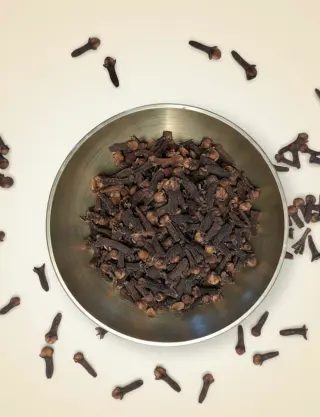
Gewürznelken sind das antioxidantienreichste Gewürz überhaupt — noch vor Zimt und Kurkuma. Ihr wichtigster Wirkstoff, das Eugenol, ist gleichzeitig ein starker Entzündungshemmer, Antioxidans und natürliches Schmerzmittel. Eugenol erklärt genau die traditionelle Verwendung der Gewürznelke gegen Zahnschmerzen: örtlich angewendet, betäubt es den Schmerz schnell und wirksam.
Eugenol hemmt dieselben Entzündungsenzyme (COX-2) wie Aspirin und Ibuprofen, jedoch ohne die damit verbundenen gastrointestinalen Nebenwirkungen. Studien an Tiermodellen und in vitro haben schützende Wirkungen auf die Leber und eine Reduktion systemischer Entzündungsmarker gezeigt.
In der Küche werden Gewürznelken ganz (vor dem Servieren zu entfernen) oder gemahlen verwendet. Sie sind unverzichtbar in Garam Masala, Biryani und Chai Masala. Ihre Stärke ist so groß, dass eine moderate Dosis ausreicht — genau das ayurvedische Prinzip: Jedes Gewürz hat sein richtiges Maß.
5. Schwarzer Pfeffer: weit mehr als ein Curcumin-Verstärker
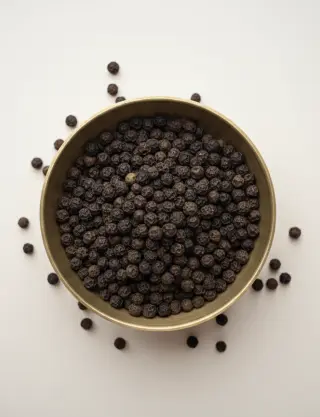
Schwarzer Pfeffer wird oft als "Begleiter des Kurkumas" bezeichnet — und er spielt tatsächlich diese entscheidende Rolle als Bioverfügbarkeitsverstärker. Aber Piperin, sein Wirkstoff, besitzt eigene entzündungshemmende Eigenschaften, unabhängig vom Kurkuma.
Piperin hemmt NF-kB (wie Curcumin), blockiert die Produktion pro-inflammatorischer Zytokine und zeigt in mehreren Studien neuroprotektive Wirkungen. Es verbessert auch die Verdauung, indem es die Magensaftsekretion anregt und die Darmmotilität fördert — was grundlegend ist, da schlechte Verdauung laut Ayurveda selbst eine Quelle chronischer Entzündungen ist (Konzept des Ama, oder unverdauter Toxine).
Der Ayurveda betrachtet schwarzen Pfeffer als Deepana (der das Verdauungsfeuer, den Agni, anfacht) und als Pachana (der beim Verdauen von Toxinen hilft). Diese beiden Eigenschaften zusammen machen ihn zum Unterstützungsgewürz schlechthin — in fast allen ayurvedischen Formulierungen vorhanden.
6. Kardamom: die Königin der Gewürze
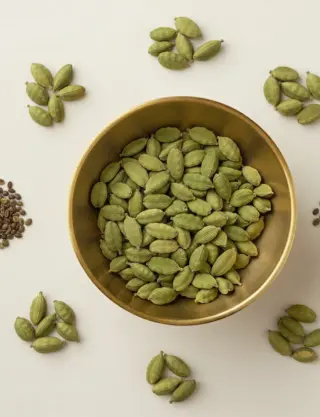
Grüner Kardamom wird in Indien Elaichi genannt, und sein Titel als "Königin der Gewürze" ist wohlverdient. Er ist außergewöhnlich reich an Antioxidantien — insbesondere Cineol und Alpha-Terpinylacetat — die die freien Radikale neutralisieren, die den oxidativen Stress auslösen, ein Prozess, der eng mit chronischen Entzündungen verbunden ist.
Klinische Studien haben gezeigt, dass der regelmäßige Kardamomkonsum den Blutdruck bei Hypertonikern senkt und Entzündungsmarker (CRP, Interleukine) im Blut verringert. Er ist auch für seine positiven Auswirkungen auf die Verdauung anerkannt: Er stimuliert die Speichelproduktion, lindert Blähungen, reduziert Übelkeit und beruhigt Verdauungskrämpfe.
Im Ayurveda wird Kardamom als tridoshisches Gewürz eingestuft — er balanciert alle drei Doshas (Vata, Pitta, Kapha), ohne eines davon zu verschlimmern. Das ist eine Seltenheit: Die meisten Gewürze wärmen oder kühlen den Körper je nach Konstitution stärker. Kardamom hingegen eignet sich für alle.
Der Synergieeffekt: warum die indische Küche mächtiger ist als ihre Zutaten
Was an der indischen Küche bemerkenswert ist, ist, dass sie diese sechs Gewürze systematisch in durchdachten Proportionen kombiniert. Garam Masala verbindet Gewürznelken, Kardamom, Zimt und schwarzen Pfeffer. Chai Masala vereint Ingwer, Kardamom, Zimt und Gewürznelken. Golden Milk vermählt Kurkuma, Ingwer, Zimt und schwarzen Pfeffer.
Diese Kombinationen sind keine kulinarischen Zufälle. Die moderne Forschung beginnt zu dokumentieren, was der Ayurveda seit Jahrtausenden praktiziert: Gewürze wirken in Synergie. Piperin aus schwarzem Pfeffer verstärkt Curcumin aus Kurkuma spektakulär. Ingwer und Zimt wirken auf komplementäre Entzündungswege. Eugenol aus Gewürznelken und die Antioxidantien aus Kardamom potenzieren sich gegenseitig.
Anders gesagt tut ein gut gewürztes Curry mehr für den Körper als die Summe seiner einzelnen Zutaten. Das ist die Weisheit der indischen Küche: eine als täglicher Genuss getarnte Medizin.
Wie Sie sie täglich integrieren: praktische Tipps
Die gute Nachricht ist, dass es nicht notwendig ist, Nahrungsergänzungsmittel zu nehmen oder die Ernährung grundlegend umzustellen. Diese sechs Gewürze lassen sich leicht in eine tägliche Routine integrieren:
- Morgens — Golden Milk oder Kurkuma-Tee: ein Teelöffel Lakadong-Kurkuma, eine Prise schwarzer Pfeffer, warme Voll- oder Kokosmilch, ein Hauch Honig. Optional: eine Prise Ceylon-Zimt und etwas Ingwerpulver. Das ist die vollständigste ayurvedische Formel für einen sanften Tagesstart. Unser authentisches Golden-Milk-Rezept.
- Beim Kochen — Kurkuma immer mit Pfeffer verwenden: egal welches Rezept (Suppe, Reis, Gemüse, Linsen) — geben Sie einen halben Teelöffel Kurkuma und eine Prise schwarzen Pfeffer dazu. Das ist die einfachste und wirkungsvollste entzündungshemmende Gewohnheit.
- Garam Masala als Basis: ein gutes hausgemachtes oder hochwertiges Garam Masala fasst mehrere entzündungshemmende Gewürze in einer einzigen Menge zusammen. Am Ende des Garens von Currys, Dals und Gemüsegerichten hinzufügen, um alle Aromen zu erhalten.
- Abends — Masala Chai: schwarzer Tee aufgebrüht mit Kardamom, Ceylon-Zimt, Ingwer und Gewürznelken. Ein wohltuendes Getränk, das laut Ayurveda auch eine Behandlung am Tagesende für das Verdauungs- und Nervensystem ist.
- Gewürznelke als Digestif: in Indien ist es üblich, nach den Mahlzeiten eine Gewürznelke zu kauen, um die Verdauung zu fördern und den Mund zu erfrischen. Eine einfache, uralte und direkt entzündungshemmende Geste.
Ayurveda und moderne Wissenschaft: zwei Sprachen für dieselbe Wahrheit
Der Ayurveda beschrieb Kurkuma als Shodhana — einen inneren Reiniger. Die Wissenschaft nennt es einen NF-kB-Inhibitor. Ingwer war ein Vishwabheshaja — ein universelles Heilmittel. Die Pharmakologie identifiziert seine COX-2- und LOX-Inhibitoren. Kardamom glich die drei Doshas aus — Biologen messen seine Auswirkungen auf Entzündungszytokine und Blutdruck.
Diese Parallele ist kein Zufall. Der Ayurveda hatte Jahrtausende empirischer Beobachtung, um seine Verschreibungen zu verfeinern. Generationen von Praktikern, Patienten und Familien testeten, überlieferten, korrigierten und perfektionierten diese Formulierungen. Was die Wissenschaft heute tut, ist, präzise Worte für Phänomene zu finden, die die Tradition beobachtete, ohne sie auf dieselbe Weise zu benennen. Das Ergebnis ist dasselbe: Diese Gewürze wirken.
Das ist kein Grund, die moderne Medizin abzulehnen — ganz im Gegenteil. Es ist eine Einladung, den eigenen Lebensstil mit zeiterprobten Praktiken zu bereichern, die nun durch die Forschung bestätigt werden.
Vorsichtsmaßnahmen und gesunder Menschenverstand
Diese Gewürze sind Lebensmittel, keine Medikamente. Sie ersetzen in keiner Weise eine von einem Arzt verschriebene Behandlung. Wenn Sie an einer diagnostizierten Entzündungserkrankung leiden (rheumatoide Arthritis, Morbus Crohn, Herz-Kreislauf-Erkrankung), konsultieren Sie Ihren Arzt, bevor Sie diese Gewürze zu therapeutischen Zwecken verwenden.
Einige spezifische Vorsichtsmaßnahmen sind erwähnenswert:
- Kurkuma und Blutverdünner: in hohen Dosen kann Kurkuma die Wirkung von Blutverdünnern (Warfarin, Aspirin, Heparin) verstärken. In normalen kulinarischen Mengen (ein Teelöffel pro Tag) ist das Risiko gering, aber informieren Sie Ihren Arzt immer über Ihren Gewürzkonsum, wenn Sie eine solche Behandlung erhalten.
- Ingwer und Schwangerschaft: in normalen kulinarischen Mengen ist Ingwer während der Schwangerschaft sicher und wird oft gegen morgendliche Übelkeit empfohlen. Bei hohen therapeutischen Dosen ist in der Spätschwangerschaft Vorsicht geboten. Konsultieren Sie Ihre Hebamme oder Ihren Arzt.
- Die Regel der Mäßigung: Der Ayurveda lehrt dies seit jeher — selbst die besten Dinge werden im Übermaß schädlich. Eine abwechslungsreiche und ausgewogene Ernährung, die regelmäßig nach indischen Traditionen gewürzt wird, ist weitaus vorteilhafter als der gelegentliche Überkonsum eines einzigen Gewürzes.
Table Indienne Gewürze: eine direkte Qualitätsquelle
Bei Table Indienne wählen wir jedes dieser sechs Gewürze direkt bei Erzeugern aus, deren Lieferanten von der Europäischen Union biologisch zertifiziert sind. Die Qualität des Gewürzes bestimmt die Menge der enthaltenen Wirkstoffe — und damit seine Wirksamkeit.
Unser Lakadong-Kurkuma ist der Stolz unserer Auswahl: angebaut in den Hügeln von Jowai, Meghalaya, liefert er 7 bis 8 % Curcumin — gemessen und verifiziert. Unser Ceylon-Zimt Grade Alba stammt aus Sri Lanka und nicht aus irgendeinem Cassia-Ersatz. Unser grüner Kardamom, unsere Gewürznelken, unser Ingwerpulver und unser schwarzer Pfeffer werden alle nach ihrer Frische und aromatischen Fülle ausgewählt.
Diese Gewürze reisen von Indien zu unserem Geschäft in Wittisheim im Elsass. Sie kommen zu Ihnen, um in Ihre täglichen Mahlzeiten die Weisheit einer jahrtausendealten kulinarischen und medizinischen Tradition zu bringen.
Und wenn Sie weiter gehen möchten — wenn Sie lernen möchten, mit diesen Gewürzen nach authentischen indischen Techniken zu kochen — sind unsere indischen Kochworkshops in Wittisheim genau dafür konzipiert. Denn die Gewürze zu kennen, ist gut. Sie kochen zu können, ist besser.