

Papadum Assortment
Discover our papadum assortment, crispy Indian flatbreads perfect as a starter or side dish.
Ready for shipping, delivery time 3-21 business days
Delivery from €4.80 at Mondial Relay pickup points.



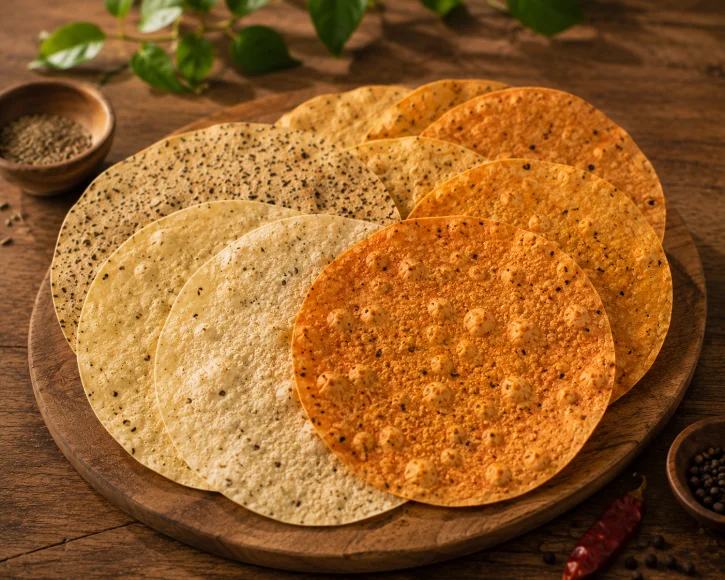
Papadum Assortment: the essential crunch of Indian cuisine
Papadums (also known as papads or poppadoms) are thin, crispy flatbreads made from lentil flour, inseparable from any traditional Indian meal. This assortment offers a selection of varied flavours to accompany your curries, dals and everyday meals. Handcrafted in India using traditional methods, these papadums deliver an irresistible crunch that elevates every dish.
Why choose our papadums?
Our artisanal papadums are prepared according to Indian tradition with urad dal lentil flour, offering a uniquely crispy texture and subtly spiced flavour. They are incredibly versatile: flame-grilled for a light result, deep-fried for maximum crunch, or simply microwaved for an express preparation. Rich in plant protein thanks to the lentils, they also make a nourishing snack.
Culinary uses:
- Traditional Indian appetiser: grilled, fried or microwaved in seconds
- Classic accompaniment to curries, dals and Indian sauced dishes
- Crumbled as a crispy topping for salads and soups
- Served with chutneys (mango, coriander, tamarind) and raita
- Crispy snack with drinks at aperitif time
- Base for canapes and original appetiser bites
Origin and quality:
Our papadums are handcrafted in India using traditional recipes based on urad dal lentil flour. Ancestral know-how for an authentically crispy result.
Storage:
Store your papadums in a dry, cool place, away from moisture, in their original packaging. Once opened, reseal the packet carefully to maintain their freshness.
High in plant protein thanks to urad dal lentils
Good source of dietary fibre
Traditionally gluten-free (made from lentil flour)
Low in fat before cooking (grilled or microwaved)
Source of B vitamins
Rich in iron thanks to lentils
Source of complex carbohydrates for sustained energy
Nutritional declaration per 100g
| Nutritional component | Per 100g |
|---|---|
| Energy | 1 450 kJ / 346 kcal |
| Fat | ~ 6 g |
| of which saturated fat | ~ 1,5 g |
| Carbohydrates | ~ 53 g |
| of which sugars | ~ 3 g |
| Dietary fiber | ~ 4 g |
| Proteins | ~ 22 g |
| Salt | ~ 2,5 g |
| Vegetarian | Yes |
| Origin | India |
| Quality | Artisanal |
| Type | Lentil flatbread |
| Taste profile | Crispy and savoury with a lightly spiced seasoning. A thin, airy texture that shatters in the mouth, with subtle notes of lentils and Indian spices. |
Learn more
The papadum is one of the oldest foods of the Indian subcontinent. References to thin lentil flatbreads appear in Sanskrit texts dating from several centuries BC. The word "papadum" derives from the Sanskrit parpaṭa, meaning a thin, crispy flatbread. In Kautilya's Arthashastra (4th century BC), a treatise on governance and economics, similar preparations are mentioned among foodstuffs.
Traditionally, papadum-making was a domestic and communal activity. In Indian villages, women prepared large quantities during the hot, dry season, sun-drying them on bamboo mats. This collective work was an important social occasion where women gathered to knead, roll and dry the flatbreads together.
The modern history of the papadum is inseparable from Lijjat Papad, a women's cooperative founded in 1959 in Mumbai with just 7 women and capital of 80 rupees. Today, Lijjat employs over 45,000 women across India and is the world's largest papadum producer. This success story has become a symbol of women's entrepreneurship in India.
Each region of India has its own papadum tradition. In Rajasthan, they are prepared with cumin and black pepper. In Gujarat, papadums are often spicier, with chilli and asafoetida. In South India (Tamil Nadu, Karnataka), appalam are often rice-based rather than lentil-based, and are thinner and more delicate.
Did you know?
- The Lijjat Papad cooperative, founded by 7 women in 1959, now employs over 45,000 women and is the world's largest papadum producer
- In India, papadums are served at virtually every meal
- Papadums can be cooked three ways: fried (crispy and golden), flame-grilled (bubbles and a light smoky flavour) or microwaved (quick and fat-free)
- The word "papadum" has over 30 different English spellings
| Characteristic | Detail |
|---|---|
| Base ingredient | Black lentil flour (urad dal) |
| Other possible ingredients | Salt, oil, spices (cumin, pepper, garlic, chilli, asafoetida) |
| Shape | Round, ultra-thin flatbread (1-2 mm), 15-20 cm diameter |
| Texture (uncooked) | Rigid, dry, brittle |
| Texture (cooked) | Crispy, airy, flaky |
| Key regions | Rajasthan, Gujarat, Maharashtra, Tamil Nadu |
The papadum is a pan-Indian product, prepared and consumed across the entire subcontinent. The dough is made from urad dal flour kneaded with salt, spices and a small amount of oil. The flatbreads are rolled ultra-thin and sun-dried until rigid and brittle, which gives them their spectacular crispness when cooked.
The papadum's flavour profile varies by variety but shares a common base: the characteristic taste of urad dal (black lentil), slightly nutty and earthy, enhanced by cooking that develops toasted, crispy notes.
| Variety | Flavour profile |
|---|---|
| Plain | Pure urad dal flavour, lightly salted, nutty, ideal for appreciating the authentic taste |
| Cumin | Warm, earthy cumin notes, the most classic variety |
| Pepper | Delicate heat, progressive warmth, woody notes |
| Garlic | Bold and savoury, roasted notes, an assertive choice |
Chef's tip
The cooking method dramatically affects the flavour. Fried in oil, papadums are rich, crispy and golden. Flame-grilled, they develop bubbles and a subtle smoky flavour. Microwaved (30-45 seconds at full power), they are crispy with zero added fat, the healthy choice.
The papadum is one of the most versatile foods in Indian cuisine, going well beyond a simple curry accompaniment.
Traditional accompaniment
- With curries and dals: the essential accompaniment to Indian meals, the crunch contrasts beautifully with creamy sauces
- As a starter: served with chutneys (mango, mint, coriander) and raita (spiced yoghurt), the classic Indian restaurant trio
- With rice: crumbled over biryani or pilaf rice for added crunch
Creative uses
- As canapes: break a papadum into pieces and top like canapes, with guacamole, tartare, herbed cream cheese
- In salads: crumble crispy papadums over lentil, mango or cucumber salads for spectacular crunch
- As healthy chips: microwaved papadums are a healthy, gluten-free alternative to crisps
- Papadum pizza: top a grilled papadum with tomatoes, mozzarella, fresh herbs, a quick, delicious fusion snack
Three cooking methods
| Method | Time | Result |
|---|---|---|
| Frying | 5-10 seconds in hot oil (180°C) | Golden, crispy, savoury, traditional method |
| Grill/Flame | 15-30 seconds per side | Bubbles, light smoky flavour, lighter |
| Microwave | 30-45 seconds at full power | Crispy, zero added fat, healthiest |
Made from black lentil flour (urad dal), the papadum inherits the nutritional qualities of this protein-rich legume.
Nutritional properties
- High in protein: urad dal is a legume particularly rich in plant proteins (approximately 25% of the flour)
- Dietary fibre: lentil flour provides soluble and insoluble fibres that support digestive health
- Naturally gluten-free: made from lentil flour, not wheat, a naturally gluten-free crispy alternative
- Iron: urad dal is rich in iron, essential for red blood cell formation
- B vitamins: source of thiamine (B1), folic acid (B9) and other B vitamins
- Low in fat (uncooked): the raw papadum is very low in fat. Fat content varies with cooking method: frying adds significantly, microwaving adds none.
Storage tips
- Store in a dry place, away from moisture: humidity is the papadum's number one enemy, causing it to go soft
- Keep in original packaging or in an airtight container
- Do not refrigerate: the fridge introduces moisture that ruins the texture
- Shelf life: 6 to 12 months in a dry, cool place
- Signs of degradation: softened papadum that bends without breaking, rancid smell
How do I cook a papadum?
Three methods: 1) Frying: submerge in hot oil (180°C) for 5-10 seconds until puffed and golden. 2) Grill/flame: pass over a gas flame or under the oven grill for 15-30 seconds per side. 3) Microwave: place on a plate and cook 30-45 seconds at full power. Microwaving is the simplest and healthiest method (zero added fat).
Are papadums gluten-free?
Yes, traditional papadums are made from black lentil flour (urad dal), a naturally gluten-free legume. However, always check the label as some manufacturers may add wheat flour or produce in facilities where wheat is present.
What should I serve papadums with?
Traditionally, papadums accompany Indian curries, dals and rice. They are also delicious as a starter with chutneys (mango, mint, tomato) and raita (cucumber yoghurt). Creatively, use them as canape bases, crumbled over salads, or as healthy chips for snacking.
Can I eat papadums raw?
Raw papadum is not dangerous but unpleasant to eat: hard, dry and flavourless. Cooking (frying, grilling or microwaving) transforms it into a crispy, flavourful flatbread. It is designed to be cooked before consumption.
What is the difference between a papadum and naan?
They are completely different products. A papadum is an ultra-thin flatbread made from lentil flour, crispy and dry. Naan is a thick bread made from wheat flour, soft and often stuffed. They share only their Indian origin: ingredients, texture, cooking method and role in the meal are entirely different.
-
The papadum is one of the oldest foods of the Indian subcontinent. References to thin lentil flatbreads appear in Sanskrit texts dating from several centuries BC. The word "papadum" derives from the Sanskrit parpaṭa, meaning a thin, crispy flatbread. In Kautilya's Arthashastra (4th century BC), a treatise on governance and economics, similar preparations are mentioned among foodstuffs.
Traditionally, papadum-making was a domestic and communal activity. In Indian villages, women prepared large quantities during the hot, dry season, sun-drying them on bamboo mats. This collective work was an important social occasion where women gathered to knead, roll and dry the flatbreads together.
The modern history of the papadum is inseparable from Lijjat Papad, a women's cooperative founded in 1959 in Mumbai with just 7 women and capital of 80 rupees. Today, Lijjat employs over 45,000 women across India and is the world's largest papadum producer. This success story has become a symbol of women's entrepreneurship in India.
Each region of India has its own papadum tradition. In Rajasthan, they are prepared with cumin and black pepper. In Gujarat, papadums are often spicier, with chilli and asafoetida. In South India (Tamil Nadu, Karnataka), appalam are often rice-based rather than lentil-based, and are thinner and more delicate.
Did you know?
- The Lijjat Papad cooperative, founded by 7 women in 1959, now employs over 45,000 women and is the world's largest papadum producer
- In India, papadums are served at virtually every meal
- Papadums can be cooked three ways: fried (crispy and golden), flame-grilled (bubbles and a light smoky flavour) or microwaved (quick and fat-free)
- The word "papadum" has over 30 different English spellings
-
Characteristic Detail Base ingredient Black lentil flour (urad dal) Other possible ingredients Salt, oil, spices (cumin, pepper, garlic, chilli, asafoetida) Shape Round, ultra-thin flatbread (1-2 mm), 15-20 cm diameter Texture (uncooked) Rigid, dry, brittle Texture (cooked) Crispy, airy, flaky Key regions Rajasthan, Gujarat, Maharashtra, Tamil Nadu The papadum is a pan-Indian product, prepared and consumed across the entire subcontinent. The dough is made from urad dal flour kneaded with salt, spices and a small amount of oil. The flatbreads are rolled ultra-thin and sun-dried until rigid and brittle, which gives them their spectacular crispness when cooked.
-
The papadum's flavour profile varies by variety but shares a common base: the characteristic taste of urad dal (black lentil), slightly nutty and earthy, enhanced by cooking that develops toasted, crispy notes.
Variety Flavour profile Plain Pure urad dal flavour, lightly salted, nutty, ideal for appreciating the authentic taste Cumin Warm, earthy cumin notes, the most classic variety Pepper Delicate heat, progressive warmth, woody notes Garlic Bold and savoury, roasted notes, an assertive choice Chef's tip
The cooking method dramatically affects the flavour. Fried in oil, papadums are rich, crispy and golden. Flame-grilled, they develop bubbles and a subtle smoky flavour. Microwaved (30-45 seconds at full power), they are crispy with zero added fat, the healthy choice.
-
The papadum is one of the most versatile foods in Indian cuisine, going well beyond a simple curry accompaniment.
Traditional accompaniment
- With curries and dals: the essential accompaniment to Indian meals, the crunch contrasts beautifully with creamy sauces
- As a starter: served with chutneys (mango, mint, coriander) and raita (spiced yoghurt), the classic Indian restaurant trio
- With rice: crumbled over biryani or pilaf rice for added crunch
Creative uses
- As canapes: break a papadum into pieces and top like canapes, with guacamole, tartare, herbed cream cheese
- In salads: crumble crispy papadums over lentil, mango or cucumber salads for spectacular crunch
- As healthy chips: microwaved papadums are a healthy, gluten-free alternative to crisps
- Papadum pizza: top a grilled papadum with tomatoes, mozzarella, fresh herbs, a quick, delicious fusion snack
Three cooking methods
Method Time Result Frying 5-10 seconds in hot oil (180°C) Golden, crispy, savoury, traditional method Grill/Flame 15-30 seconds per side Bubbles, light smoky flavour, lighter Microwave 30-45 seconds at full power Crispy, zero added fat, healthiest -
Made from black lentil flour (urad dal), the papadum inherits the nutritional qualities of this protein-rich legume.
Nutritional properties
- High in protein: urad dal is a legume particularly rich in plant proteins (approximately 25% of the flour)
- Dietary fibre: lentil flour provides soluble and insoluble fibres that support digestive health
- Naturally gluten-free: made from lentil flour, not wheat, a naturally gluten-free crispy alternative
- Iron: urad dal is rich in iron, essential for red blood cell formation
- B vitamins: source of thiamine (B1), folic acid (B9) and other B vitamins
- Low in fat (uncooked): the raw papadum is very low in fat. Fat content varies with cooking method: frying adds significantly, microwaving adds none.
-
Storage tips
- Store in a dry place, away from moisture: humidity is the papadum's number one enemy, causing it to go soft
- Keep in original packaging or in an airtight container
- Do not refrigerate: the fridge introduces moisture that ruins the texture
- Shelf life: 6 to 12 months in a dry, cool place
- Signs of degradation: softened papadum that bends without breaking, rancid smell
-
How do I cook a papadum?
Three methods: 1) Frying: submerge in hot oil (180°C) for 5-10 seconds until puffed and golden. 2) Grill/flame: pass over a gas flame or under the oven grill for 15-30 seconds per side. 3) Microwave: place on a plate and cook 30-45 seconds at full power. Microwaving is the simplest and healthiest method (zero added fat).
Are papadums gluten-free?
Yes, traditional papadums are made from black lentil flour (urad dal), a naturally gluten-free legume. However, always check the label as some manufacturers may add wheat flour or produce in facilities where wheat is present.
What should I serve papadums with?
Traditionally, papadums accompany Indian curries, dals and rice. They are also delicious as a starter with chutneys (mango, mint, tomato) and raita (cucumber yoghurt). Creatively, use them as canape bases, crumbled over salads, or as healthy chips for snacking.
Can I eat papadums raw?
Raw papadum is not dangerous but unpleasant to eat: hard, dry and flavourless. Cooking (frying, grilling or microwaving) transforms it into a crispy, flavourful flatbread. It is designed to be cooked before consumption.
What is the difference between a papadum and naan?
They are completely different products. A papadum is an ultra-thin flatbread made from lentil flour, crispy and dry. Naan is a thick bread made from wheat flour, soft and often stuffed. They share only their Indian origin: ingredients, texture, cooking method and role in the meal are entirely different.
Questions & Answers
Thank you! Your question has been sent. Mihika will answer soon and you will receive an email.
Papadum Assortment
Discover also
Other products you might like