Mortar pestle
Stone mortar and pestle, indispensable for grinding herbs and spices. 15 cm diameter, 2.7 kg. Sturdy and traditional.
In the same style
This product goes well with the following products.

Sabai grass bread box
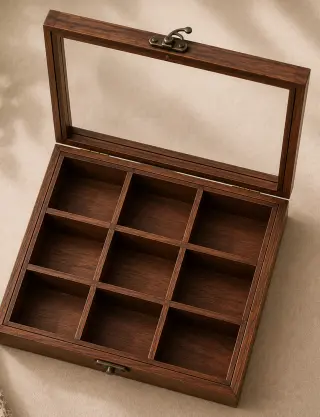
Spice box


Mortar pestle
In Indian culture:The use of a stone mortar and pestle is deeply rooted in culinary, medicinal and even ritual traditions in Indian culture. More than just a kitchen tool, it is a symbol of heritage, a way of life and a method that delivers results unmatched by modern appliances. The most common form of mortar and pestle in India is the ‘sil batta’ or ‘sil nora’, which consists of a flat, rectangular stone (sil) and a cylindrical stone roll (batta).
Superior flavour profile: The grinding and pounding action of a stone mortar breaks down the cellular structure of the ingredients, releasing the essential oils, which a blender with blades cannot do. The result is a more fragrant and flavoursome paste for currys, chutneys and spice blends. The gentle friction and heat generated during the process also help to blend the flavours more effectively.
Please note : As our products are handmade, slight variations from the images are to be expected and products may vary slightly in size, dimensions and volume. Coarse grinding your ingredients not only improves the taste of your dishes, but also preserves the incredible benefits of the spices you use.
Note that these mortars and pestles are not suitable for intensive grinding, as the soapstone wears out with use. They are traditionally recommended for use in homes with young children, as soapstone powder is rich in calcium and magnesium. They should not be used for hard grinding like granite or metal alternatives; they are perfect for soft grinding.
Our stone cookware is meticulously crafted from the highest quality stone, offering the right density and structure. With a higher calcium content, it is durable and free from artificial colourings. These traditional kitchen utensils are brought to you by the skilled craftsmen of Uthukuli Stone in Tamil Nadu, who guarantee their quality and authenticity.
These traditional cooking utensils fit perfectly into modern kitchens, offering great versatility.To go further, our article on how to toast spices explains how to grind them afterwards with a mortar for the best result.
| Dimensions | 15 cm |
| Weight | 2700 g |
| Origin | India |
| Composition | Stone |
Learn more
The sil batta (also called ammi kal in Tamil or attu kal in Malayalam) is a flat grinding-slab mortar that has been used in India since the Indus Valley civilisation, more than 5,000 years ago. Examples have been found during archaeological excavations at Mohenjo-daro and Harappa.
Unlike the Western bowl-shaped mortar, the sil batta consists of a flat rectangular stone (sil) and a cylindrical roller (batta) that is rolled back and forth to crush spices and ingredients. This grinding motion produces pastes of a fineness and evenness that cannot be reproduced any other way.
Cultural significance
The sil batta holds a sacred place in Indian culture. Traditionally, it was part of the bride's dowry: a sign of prosperity and culinary skill. In Tamil households, the granite mortar is blessed during the housewarming ceremony (griha pravesam). Despite the arrival of electric blenders, many Indian cooks still use it daily, convinced that the slowness of the grinding preserves the essential oils and aromas of the spices.
| Tradition | Local name | Shape | Main use |
|---|---|---|---|
| India (North) | Sil batta / Okhli | Flat stone + roller or deep bowl | Spice pastes, chutneys |
| India (South) | Ammi kal / Attu kal | Flat rectangular granite | Pastes for dosa, idli, chutneys |
| Thailand | Khrok sak | Deep granite, heavy pestle | Curry pastes, som tam |
| Mexico | Molcajete | Volcanic basalt, tripod | Guacamole, salsas |
| Japan | Suribachi | Ridged ceramic, wooden pestle | Sesame, miso |
The choice of material determines the durability, grinding efficiency and best uses of the mortar. Three stones dominate traditional making.
| Material | Advantages | Drawbacks | Ideal for |
|---|---|---|---|
| Granite | Extremely durable, non-porous, heavy and stable, does not absorb odours | Very heavy, needs initial seasoning | Spice pastes, chutneys, intensive daily use |
| Basalt | Naturally rough surface (better grip), sturdy | Slightly porous, can darken some preparations | Dry spices, guacamole, salsas |
| Marble | Elegant, very smooth surface, easy to clean | Softer (scratches), can absorb acids, slippery | Fresh herbs, aioli, light preparations |
Craftsmen and regions of making
In India, granite mortars are mainly cut by craftsmen in Rajasthan (sandstone and pink granite) and Tamil Nadu (black granite from Mahabalipuram). The stone is quarried, roughed out with a chisel, then polished by hand: a process that takes several days for a quality mortar. Rajasthani craftsmen use techniques handed down over centuries, shaping each piece by hand without machines.
Why is granite the king of mortars?
Granite is an igneous rock with a hardness of 6 to 7 on the Mohs scale (diamond is 10). It does not scratch from contact with spices, does not crumble, absorbs neither odours nor liquids, and its considerable mass keeps it stable during grinding. A good granite mortar lasts several generations.
Grinding techniques
Mastering the mortar takes a little practice, but the results are incomparable.
- Pounding (vertical motion): for crushing whole spices, peppercorns, cardamom, coriander seeds. Hold the pestle upright and strike with short, regular blows.
- Crushing (rotary motion): for reducing garlic, ginger and chillies to a paste. Press firmly and turn the pestle against the walls of the mortar in circles.
- Grinding (back-and-forth motion): the Indian sil batta technique. Ideal for very fine curry or chutney pastes. Apply constant pressure as you roll the pestle.
Practical tips
- Start with the hardest ingredients (seeds, dry spices), then add the softer ones (garlic, herbs)
- Add a pinch of coarse salt to improve grip when grinding wet ingredients
- Never fill the mortar more than halfway, to avoid splashes
- Work in small batches for a more even result
Mortar vs blender: why does it taste different?
A blender cuts and tears the fibres at high speed, which generates heat and oxidises the essential oils. A mortar crushes and grinds slowly, releasing the aromas without altering them. This is why a curry paste pounded in a mortar will always have more aromatic depth than a blended one. Leading Thai chefs categorically refuse to use a blender for their curry pastes.
Initial seasoning (new mortar)
A new granite or basalt mortar must be seasoned before first use to remove stone dust and smooth the surface.
- Rinse thoroughly with clear water
- Pound a handful of raw white rice to a powder: repeat 3 to 4 times, discarding the grey rice each time
- Then pound garlic, ginger and coarse salt: this “feeds” the stone and fills the micro-pores
- Rinse with clear water and let it dry completely in the open air
Daily cleaning
- Rinse immediately after use with lukewarm water
- Scrub with a stiff-bristled brush if necessary
- Let it dry completely in the open air before storing
Never use soap!
Granite and basalt are micro-porous stones that would absorb the taste of soap, which would then end up in your preparations. Never use washing-up liquid, chemical products or a dishwasher. Clear water and a brush are enough. For stubborn stains, pound raw rice or baking soda: it is the only acceptable “detergent”.
Removing stains and odours
- Turmeric stains: pound raw rice, which absorbs the pigment. Then leave the mortar in the sun for a few hours.
- Persistent odours: pound raw rice mixed with food-grade baking soda, leave to rest for 30 minutes, rinse.
- Mould: never store the mortar damp. If mould appears, pound coarse salt with lemon, rinse and dry in the sun.
The mortar is the ideal tool for making homemade spice blends and aromatic pastes. Here are a few classics to make at home.
Homemade garam masala
Dry-roast in a pan: 2 tablespoons coriander seeds, 1 tablespoon black peppercorns, 1 teaspoon cumin seeds, 6 cloves, 4 green cardamom pods, 1 broken cinnamon stick. Pound in the mortar to a fine powder. This fresh garam masala will outdo any commercial version in aroma.
Thai curry paste
Pound in the mortar: 5 rehydrated dried chillies, 2 lemongrass stalks, 3 cm galangal, 4 garlic cloves, 2 shallots, 1 teaspoon toasted coriander seeds, kaffir lime zest, shrimp paste. Start with the dry ingredients, then add the wet ones gradually.
Pesto alla genovese
True pesto is made in a mortar. Pound garlic with coarse salt, add the basil leaves and pine nuts, then work in the Parmesan and a thin stream of olive oil. The difference from a blender pesto is spectacular: the basil stays green and the oil does not oxidise.
Moroccan chermoula
Pound fresh coriander, garlic, cumin, paprika, salt and lemon juice. This North African marinade elevates grilled fish and roasted vegetables.
Egyptian dukkah
Coarsely pound toasted hazelnuts or almonds with coriander seeds, cumin, sesame, salt and pepper. Serve with bread dipped in olive oil: an irresistible aperitif.
Granite or marble: which material should I choose?
Granite is the recommended choice for versatile, everyday use. Its hardness (6-7 on the Mohs scale) makes it practically indestructible. It absorbs neither odours nor liquids. Marble is softer, scratches against hard spices and can absorb acids (lemon, vinegar). Keep marble for light preparations (fresh herbs, aioli) and prefer granite for everything else.
How do I season a new mortar?
Rinse it thoroughly with clear water. Pound several handfuls of raw white rice until the rice stays white (not greyish). Then pound garlic, ginger and coarse salt to feed the stone. Rinse and leave to dry in the open air. This removes the dust left from cutting and prepares the surface for grinding.
Can I use soap to clean the mortar?
No, never. Granite and basalt have micro-pores that would absorb the taste of soap. Clean only with clear water and a brush. For stubborn stains, pound raw rice or baking soda: they are the only acceptable detergents for a stone mortar.
Stone mortar or electric spice grinder?
Both have their place in the kitchen. The electric grinder is quick and practical for large quantities of fine powder. But the mortar gives a superior result in aroma: it crushes the fibres without heating them, which preserves the volatile essential oils. For curry pastes, chutneys and small batches of spice blends, the mortar is unbeatable.
-
The sil batta (also called ammi kal in Tamil or attu kal in Malayalam) is a flat grinding-slab mortar that has been used in India since the Indus Valley civilisation, more than 5,000 years ago. Examples have been found during archaeological excavations at Mohenjo-daro and Harappa.
Unlike the Western bowl-shaped mortar, the sil batta consists of a flat rectangular stone (sil) and a cylindrical roller (batta) that is rolled back and forth to crush spices and ingredients. This grinding motion produces pastes of a fineness and evenness that cannot be reproduced any other way.
Cultural significance
The sil batta holds a sacred place in Indian culture. Traditionally, it was part of the bride's dowry: a sign of prosperity and culinary skill. In Tamil households, the granite mortar is blessed during the housewarming ceremony (griha pravesam). Despite the arrival of electric blenders, many Indian cooks still use it daily, convinced that the slowness of the grinding preserves the essential oils and aromas of the spices.
Tradition Local name Shape Main use India (North) Sil batta / Okhli Flat stone + roller or deep bowl Spice pastes, chutneys India (South) Ammi kal / Attu kal Flat rectangular granite Pastes for dosa, idli, chutneys Thailand Khrok sak Deep granite, heavy pestle Curry pastes, som tam Mexico Molcajete Volcanic basalt, tripod Guacamole, salsas Japan Suribachi Ridged ceramic, wooden pestle Sesame, miso -
The choice of material determines the durability, grinding efficiency and best uses of the mortar. Three stones dominate traditional making.
Material Advantages Drawbacks Ideal for Granite Extremely durable, non-porous, heavy and stable, does not absorb odours Very heavy, needs initial seasoning Spice pastes, chutneys, intensive daily use Basalt Naturally rough surface (better grip), sturdy Slightly porous, can darken some preparations Dry spices, guacamole, salsas Marble Elegant, very smooth surface, easy to clean Softer (scratches), can absorb acids, slippery Fresh herbs, aioli, light preparations Craftsmen and regions of making
In India, granite mortars are mainly cut by craftsmen in Rajasthan (sandstone and pink granite) and Tamil Nadu (black granite from Mahabalipuram). The stone is quarried, roughed out with a chisel, then polished by hand: a process that takes several days for a quality mortar. Rajasthani craftsmen use techniques handed down over centuries, shaping each piece by hand without machines.
Why is granite the king of mortars?
Granite is an igneous rock with a hardness of 6 to 7 on the Mohs scale (diamond is 10). It does not scratch from contact with spices, does not crumble, absorbs neither odours nor liquids, and its considerable mass keeps it stable during grinding. A good granite mortar lasts several generations.
-
Grinding techniques
Mastering the mortar takes a little practice, but the results are incomparable.
- Pounding (vertical motion): for crushing whole spices, peppercorns, cardamom, coriander seeds. Hold the pestle upright and strike with short, regular blows.
- Crushing (rotary motion): for reducing garlic, ginger and chillies to a paste. Press firmly and turn the pestle against the walls of the mortar in circles.
- Grinding (back-and-forth motion): the Indian sil batta technique. Ideal for very fine curry or chutney pastes. Apply constant pressure as you roll the pestle.
Practical tips
- Start with the hardest ingredients (seeds, dry spices), then add the softer ones (garlic, herbs)
- Add a pinch of coarse salt to improve grip when grinding wet ingredients
- Never fill the mortar more than halfway, to avoid splashes
- Work in small batches for a more even result
Mortar vs blender: why does it taste different?
A blender cuts and tears the fibres at high speed, which generates heat and oxidises the essential oils. A mortar crushes and grinds slowly, releasing the aromas without altering them. This is why a curry paste pounded in a mortar will always have more aromatic depth than a blended one. Leading Thai chefs categorically refuse to use a blender for their curry pastes.
-
Initial seasoning (new mortar)
A new granite or basalt mortar must be seasoned before first use to remove stone dust and smooth the surface.
- Rinse thoroughly with clear water
- Pound a handful of raw white rice to a powder: repeat 3 to 4 times, discarding the grey rice each time
- Then pound garlic, ginger and coarse salt: this “feeds” the stone and fills the micro-pores
- Rinse with clear water and let it dry completely in the open air
Daily cleaning
- Rinse immediately after use with lukewarm water
- Scrub with a stiff-bristled brush if necessary
- Let it dry completely in the open air before storing
Never use soap!
Granite and basalt are micro-porous stones that would absorb the taste of soap, which would then end up in your preparations. Never use washing-up liquid, chemical products or a dishwasher. Clear water and a brush are enough. For stubborn stains, pound raw rice or baking soda: it is the only acceptable “detergent”.
Removing stains and odours
- Turmeric stains: pound raw rice, which absorbs the pigment. Then leave the mortar in the sun for a few hours.
- Persistent odours: pound raw rice mixed with food-grade baking soda, leave to rest for 30 minutes, rinse.
- Mould: never store the mortar damp. If mould appears, pound coarse salt with lemon, rinse and dry in the sun.
-
The mortar is the ideal tool for making homemade spice blends and aromatic pastes. Here are a few classics to make at home.
Homemade garam masala
Dry-roast in a pan: 2 tablespoons coriander seeds, 1 tablespoon black peppercorns, 1 teaspoon cumin seeds, 6 cloves, 4 green cardamom pods, 1 broken cinnamon stick. Pound in the mortar to a fine powder. This fresh garam masala will outdo any commercial version in aroma.
Thai curry paste
Pound in the mortar: 5 rehydrated dried chillies, 2 lemongrass stalks, 3 cm galangal, 4 garlic cloves, 2 shallots, 1 teaspoon toasted coriander seeds, kaffir lime zest, shrimp paste. Start with the dry ingredients, then add the wet ones gradually.
Pesto alla genovese
True pesto is made in a mortar. Pound garlic with coarse salt, add the basil leaves and pine nuts, then work in the Parmesan and a thin stream of olive oil. The difference from a blender pesto is spectacular: the basil stays green and the oil does not oxidise.
Moroccan chermoula
Pound fresh coriander, garlic, cumin, paprika, salt and lemon juice. This North African marinade elevates grilled fish and roasted vegetables.
Egyptian dukkah
Coarsely pound toasted hazelnuts or almonds with coriander seeds, cumin, sesame, salt and pepper. Serve with bread dipped in olive oil: an irresistible aperitif.
-
Granite or marble: which material should I choose?
Granite is the recommended choice for versatile, everyday use. Its hardness (6-7 on the Mohs scale) makes it practically indestructible. It absorbs neither odours nor liquids. Marble is softer, scratches against hard spices and can absorb acids (lemon, vinegar). Keep marble for light preparations (fresh herbs, aioli) and prefer granite for everything else.
How do I season a new mortar?
Rinse it thoroughly with clear water. Pound several handfuls of raw white rice until the rice stays white (not greyish). Then pound garlic, ginger and coarse salt to feed the stone. Rinse and leave to dry in the open air. This removes the dust left from cutting and prepares the surface for grinding.
Can I use soap to clean the mortar?
No, never. Granite and basalt have micro-pores that would absorb the taste of soap. Clean only with clear water and a brush. For stubborn stains, pound raw rice or baking soda: they are the only acceptable detergents for a stone mortar.
Stone mortar or electric spice grinder?
Both have their place in the kitchen. The electric grinder is quick and practical for large quantities of fine powder. But the mortar gives a superior result in aroma: it crushes the fibres without heating them, which preserves the volatile essential oils. For curry pastes, chutneys and small batches of spice blends, the mortar is unbeatable.
Questions & Answers
Thank you! Your question has been sent. Mihika will answer soon and you will receive an email.
You might also like
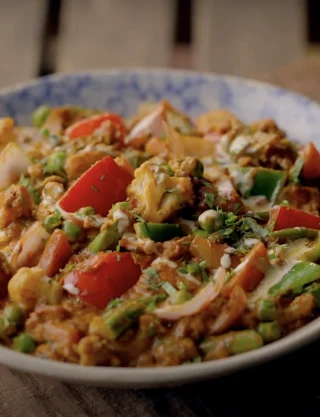
Vegetable kadhai
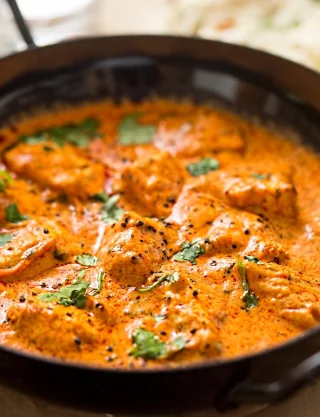
Butter chicken