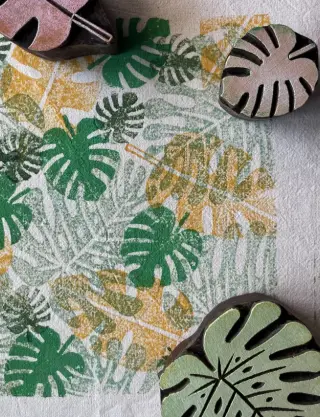




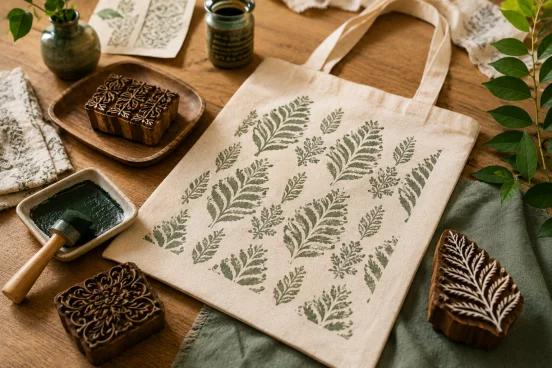
The wooden stamp is one of the most versatile tools in Indian craft, and it isn't just for paper. With the right ink and a bit of technique, it lets you print on fabric and turn a tote bag or a length of raw cotton into a one-of-a-kind piece, in the true tradition of Indian block printing. If you're new to the craft, start with our block printing for beginners guide; this one focuses specifically on fabric and tote bags.
In India, this technique is called hand block printing: every pattern is applied by hand, block after block, onto stretched fabric. The motion takes a little practice, but it's learned quickly.
What you'll need
Before you start, gather these few items: the quality of the result depends as much on your materials as on your technique.
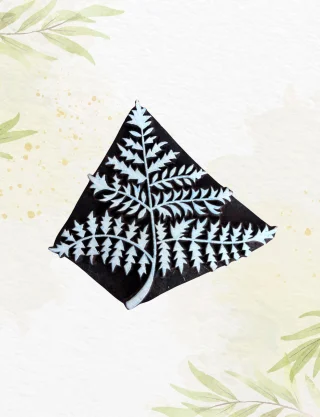
- One or more carved blocks: pick a clean, not-too-intricate pattern to start with, such as our fern leaf block. The carved channels are what shape the design: the finer they are, the more precise your inking needs to be.
- Fabric ink: unlike paint made for paper, fabric ink stays flexible once dry and holds up to washing after heat-setting. It comes as a liquid or as a thick stamp pad: the latter is easier to control on natural fibres.
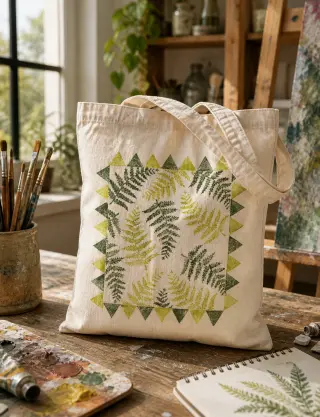
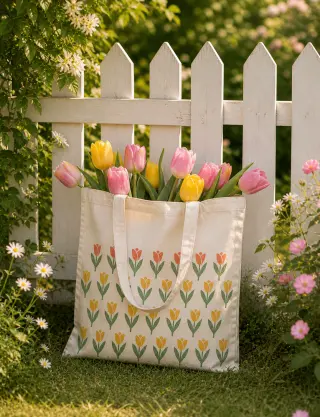
- A tote bag or 100% cotton fabric: untreated cotton absorbs ink far better than synthetic fibres. Our Framed Ferns tote bag and Tulips tote bag, already hand block-printed, are also a great reference for what the finished result should look like.
- A padded work surface: a few layers of fabric or a thin foam sheet slipped under the piece you're printing cushion the pressure and stop the pattern from squashing out of shape.
Preparing the fabric
Wash and dry the fabric before printing, without fabric softener: it leaves a film that stops ink from properly gripping the fibres. Iron it flat afterwards. Slip a sheet of cardboard or thick paper inside the tote bag: this stops ink from bleeding through to the other side and gives you a stable surface to stamp against.
The stamping technique
This is the step that makes the difference between a crisp print and a blurry one. Three rules to follow:
Inking: apply the ink to the block by dabbing gently with a sponge or a stamp pad, never with a brush. A brush pushes colour into the carved grooves, which causes bleeding on the print. A thin, even layer is plenty.
Pressure: place the block on the fabric, then press down firmly and straight down with the palm of your hand: no sliding, no rocking. A light tap with your fist or a wooden mallet on the back of the block helps apply even pressure across the whole carved surface.
Lifting off: lift the block straight up, without twisting it, to avoid smudging the edges. Re-ink before every new stamp: two light applications work better than one overloaded one.
Always test on a fabric scrap before stamping your final tote bag: the right amount of ink is something you judge by eye, not from a manual.
Heat-setting the colours
Once the design is completely dry (allow at least 24 hours lying flat), heat-setting makes the print wash-resistant. Lay a thin cloth or baking paper over the design, then iron the reverse side of the fabric for 3 to 5 minutes on the cotton setting, without steam. Let it rest for 24 to 48 hours before the first wash (inside out and on a cold cycle) to keep the colours vibrant.
Tips for a professional finish
- Plan the repeat: mark light pencil guides before stamping a pattern in a row, to keep alignment even across the whole tote bag.
- Clean the block between colours: a rinsed, fully dried block regains its full sharpness. Our guide to caring for wooden printing blocks covers cleaning and storage between sessions.
- Layer colours with care: always let a first colour dry before stamping a second one on top, or you risk unwanted mixing.
Go further with Table Indienne
Block printing is a craft born in India centuries ago and passed down through generations: to learn its history and techniques, our article Discover block printing: history, art and techniques traces this heritage.
Want to learn the technique directly from Mihika, on our own fabric and hand-carved blocks? Our block printing workshop, in Wittisheim, Alsace, walks you through the technique in a small group, with ink, fabric and blocks provided. A lovely way to leave with your own printed tote bag, with nothing to buy before you start.