



In the spice cupboard of an Indian kitchen, there is often one small jar opened with extra care: asafoetida, better known by its Hindi name, hing. This intensely pungent resin is nonetheless one of the most widely used spices in North India, turning up in a huge share of dals, curries and fritters. If you are just starting out with Indian cooking, our beginner''s guide is a good place to start before tackling a spice this distinctive.
What exactly is asafoetida?
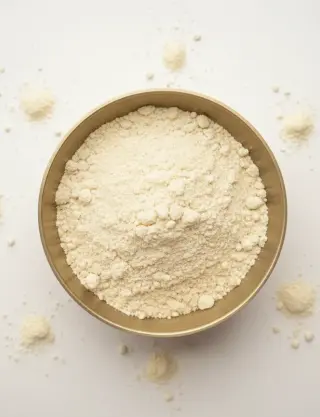
Asafoetida is not a seed, a bark or a ground root like most spices you already know: it is a dried resin, extracted from the sap of plants in the Ferula genus, which grow wild in the arid regions of Afghanistan, Iran and Kashmir. The raw resin is harvested, dried, ground, and usually blended with rice or wheat flour to make the pale yellow powder found on spice shelves: this easier-to-dose version is the one we offer at Table Indienne.
A powerful raw smell, a flavour that changes completely once cooked
Open a jar of raw asafoetida and the smell is startling: sulphurous, sharp, almost unpleasant. It is this very smell that gave the spice its blunt English name. But the moment it hits hot oil, everything changes: the sulphur compounds transform and release a round, warm aroma, vaguely reminiscent of sautéed garlic and onion. That is the whole paradox of hing: a spice you never judge raw, only once it is cooked.
The golden rule: a tiny amount goes a long way
Gram for gram, this is probably the most powerful spice in Indian cooking. A pinch (literally an eighth of a teaspoon, sometimes less) is enough to flavour an entire dish for four to six people. Too much throws a recipe off balance immediately and leaves an unpleasant bitterness. It is always better to start small and adjust: unlike salt or cumin, asafoetida is not easy to correct once the dish is nearly done.
Tempering: the step that unlocks its aroma
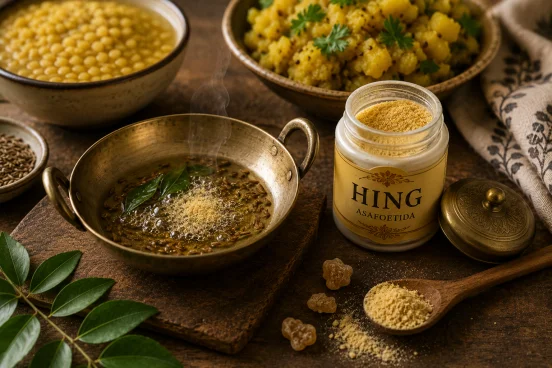
Like most Indian spices, asafoetida gives its best in hot oil or ghee, right at the start of cooking: the technique known as tadka. It is fried for a few seconds, often alongside cumin or mustard seeds, before lentils, vegetables or a spice paste go in. A pinch of asafoetida (hing) dropped into sizzling oil is enough to fill the whole kitchen with its aroma within seconds.
In India, hing is never tasted raw: it is judged only once it has sizzled for a few seconds in hot oil.
A traditional substitute for garlic and onion
In certain Indian culinary traditions (Jain cooking or satvik cooking in particular) garlic and onion are excluded for religious or spiritual reasons. Asafoetida plays a central role there, bringing an allium-like depth of flavour without using either. That is also why it now interests people following a low-FODMAP diet, or simply avoiding garlic and onion for digestive comfort: Ayurvedic tradition has long credited it with digestive properties, particularly in dishes built around legumes.
Where to use it in your own kitchen
- Dals and legumes: hing is almost systematic in lentil dishes, like our Moong Dal Khichdi, where it traditionally helps make legumes easier to digest.
- Fritters and samosas: a pinch in the filling of a homemade samosa deepens the savoury note of the potato filling.
- Pickles (achar): hing is a classic in lemon or mango pickles, where it balances the acidity.
- Vegetable curries: a pinch at the very start of the tadka, even before the onion, deepens the dish without overpowering it.
Storing it properly
Asafoetida is a powerful, volatile spice: keep it in an airtight container, away from light and moisture, ideally apart from your other spices: its aroma tends to seep into everything if the jar is not tightly closed. Stored well, it keeps its aromatic power for several years: unlike more delicate ground spices, it does not lose intensity quickly.
At Table Indienne
We offer asafoetida (hing) selected for its aromatic power, packaged in small quantities: plenty given how little is needed per dish. As with all our spices, we source it directly from smallholder farmers in India. Want to go further and see this spice at work in a real tadka? Our Indian cooking workshops in Wittisheim are a chance to learn the right technique, dose and timing.