


The silent heroes: 5 essential tools of a traditional Indian kitchen
The flavors of Indian cuisine are often credited to the spices themselves, but the real secret lies in the tools used to handle them. Growing up in India, I saw these items every day, never realizing they were the precious guardians of our culinary heritage. They are more than just metal and stone; they are the soul of the kitchen.
1. The spice box (Masala Dabba)
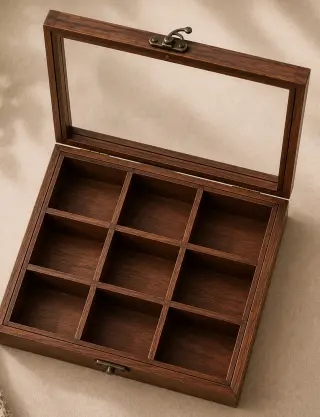
Of course, this is indispensable. While some have nine compartments and others twelve, I still remember the humble steel spice box my parents used every single day. It was simple, yet precious—the heart of the kitchen. I don't think a single meal was ever cooked in our home without it.
While every household curates their own "essential" kit, turmeric, red chili powder, asafoetida (hing), mustard seeds, and cumin are nearly obligatory.
It is truly the artist's palette of the Indian cook, kept within arm's reach to paint every dish with flavor.
2. The tadka pan
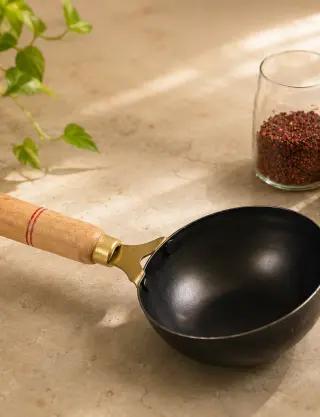
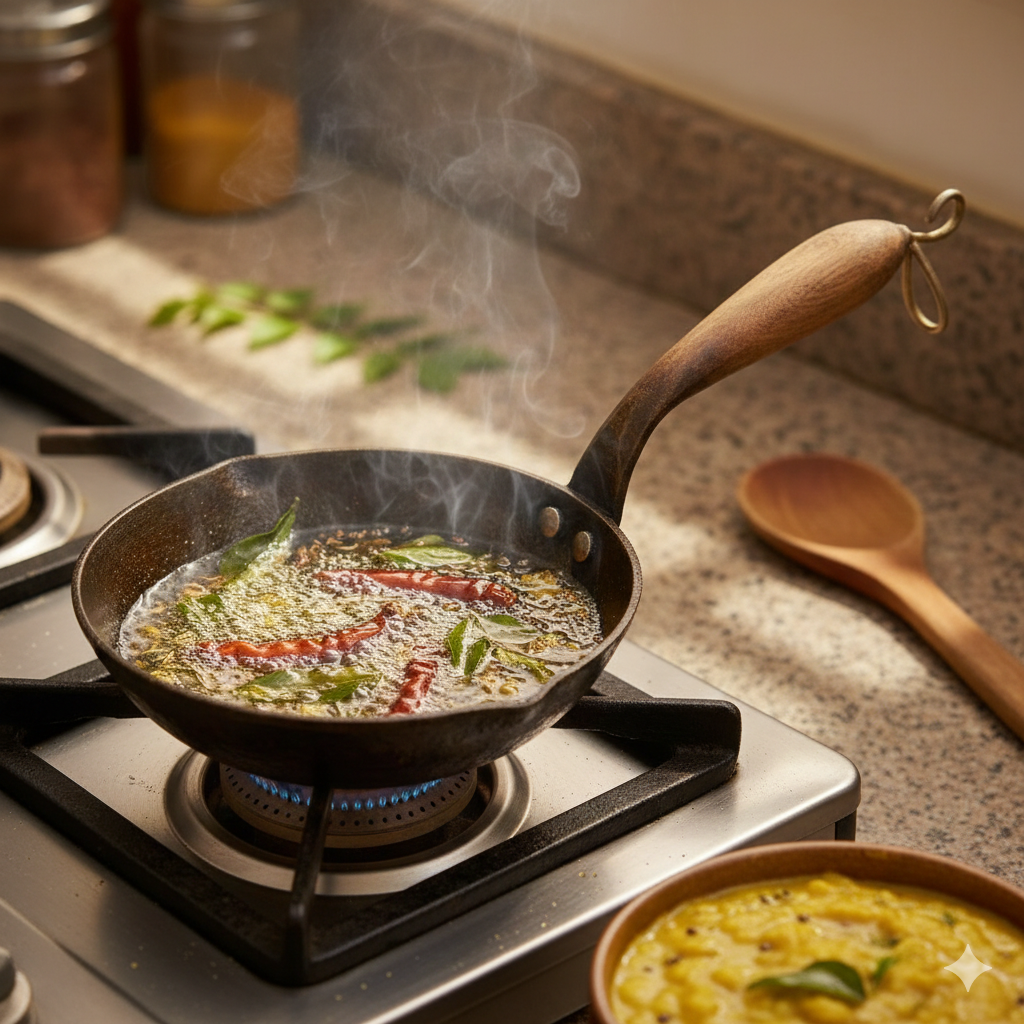
Small in size but mighty in impact! If you want to bring a dull dal to life, you give it a tadka. In an Indian household, the tadka is what "sets everything straight." It is the final flourish—the high-heat tempering of spices in hot oil or ghee.
When those mustard seeds pop and the curry leaves sizzle, the aromas are unlocked and infused into the dish. From chutneys to curd rice, that small pan and that final sizzle are the secrets to that deep, layered flavor that defines our food.
3. The Chakla-Belan (rolling board & pin)
No Indian kitchen is complete without the rhythmic "thud-thud" of the Chakla and Belan. The Chakla is the sturdy circular base (usually made of wood or marble), and the Belan is the slender rolling pin.
Watching an expert use them is like watching a dance; the hands move with incredible speed, turning a small ball of dough into a perfect, thin circle in seconds. For many of us, learning to use these was a rite of passage. We all started by rolling "maps of India" before we finally mastered the perfect round roti!
It is the tool that transforms humble flour and water into the soft, steaming bread that anchors every meal.
4. The roti box
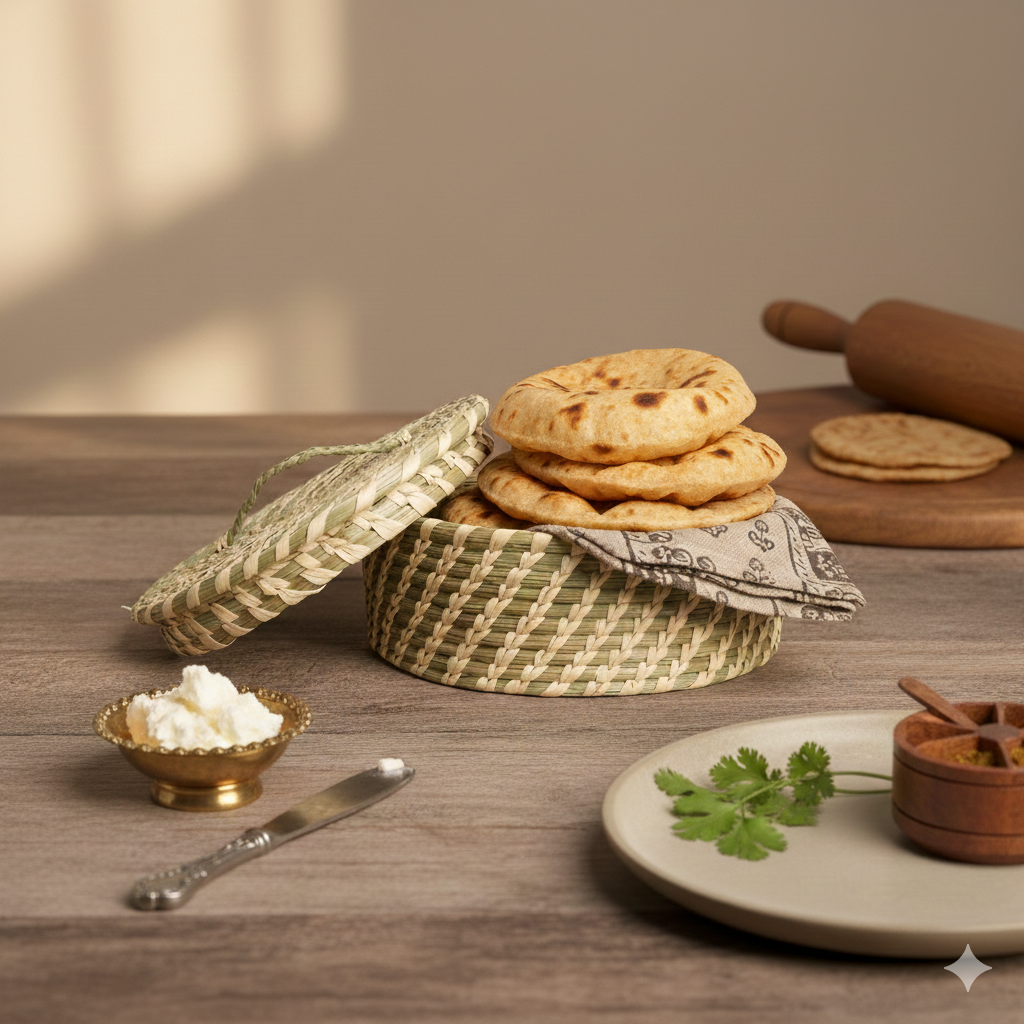
Just as a baguette basket is holy to the French, the roti box is sacred to us Indians. Once the rotis leave the Chakla-Belan and the tawa, they head straight here.
Usually lined with a soft cotton cloth to keep the bread warm and absorb excess steam, the roti box was our go-to snack station. Hungry between meals? You'd grab a cold roti from the box with some achaar (pickle) or roll one up to dip into a hot cup of chai.
It wasn't just a container; it was a constant source of comfort.
5. The mortar and pestle (Silbatta)
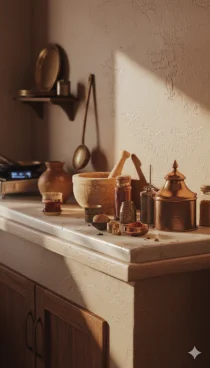
The traditional version used in old-school Indian kitchens is the Silbatta—a flat, rectangular stone and a cylindrical grinder. Using it required you to squat on the floor and use your full strength to grind pastes. Now I realize why our grandmothers never needed a gym membership; they got a full-body workout just making dinner!
There is a technical secret here, too: unlike modern electric mixers that generate heat and can "burn" the delicate oils in spices, the stone-on-stone crushing of a Silbatta keeps the flavors cool and vibrant. The texture and taste are simply unmatched. For a true Indian culinary adventure, I always recommend going back to the stone.
Conclusion
These utensils are the bridge between raw ingredients and the final, delicious meal. They remind us that cooking is a slow, sensory, and physical art form. Using them connects us to generations of cooks who knew that the best flavors aren't just grown—they are crafted.
At Table Indienne in Wittisheim, France, we share this passion for authenticity. Discover our traditional spices and utensils that will allow you to recreate these ancestral flavors in your own kitchen.